
Showing values for 100 g
Nutrition facts
per 100 g% DV = share of the FDA daily value for the selected amount.
Source: Open Food Facts · Confidence: 90% · Barcode (EAN): 3701037402108 · Data last verified:
Log Oignons Blancs in one tap
You just looked it up. Let the app remember it. Dietly tracks your calories and macros automatically, so you hit your goal without the math.
- Barcode scanner
- AI photo logging
- Free to download
Common questions
How many calories are in Oignons Blancs?
Oignons Blancs has 25 kcal per 100 g.
How much protein is in Oignons Blancs?
Oignons Blancs contains 0.7 g of protein per 100 g.
Is Oignons Blancs keto-friendly?
With 3.1 g total carbs (about 1.1 g net carbs) per 100 g, it fits low-carb and keto eating patterns in normal portions.
Is Oignons Blancs high in sodium?
Yes — 600 mg of sodium per 100 g, about 26% of the daily value.
Why does Oignons Blancs have a Nutri-Score of C?
Nutri-Score weighs negatives (calories, sugar, saturated fat, sodium) against positives (fiber, protein) per 100 g. Points against come from sodium (600 mg). Overall that places it in band C.
How much Oignons Blancs is 100 calories?
About 400 g of Oignons Blancs equals 100 kcal. It is a relatively low energy-density food, so portions can be generous.
Is Oignons Blancs high in calories?
No — only 25 kcal per 100 g; even a 300 g portion stays around 75 kcal.
Is Oignons Blancs high in sugar or fat?
Per 100 g it has 2.5 g sugar and 0.5 g fat (0.5 g saturated). Fat provides 23% of its calories, so portion size matters most here.
More Other foods
Explore all → Gaspacho - Carotte, Coriandre17 kcal · 0.4g proteinC
 Soupe De Carotte19 kcal · 0.4g proteinA
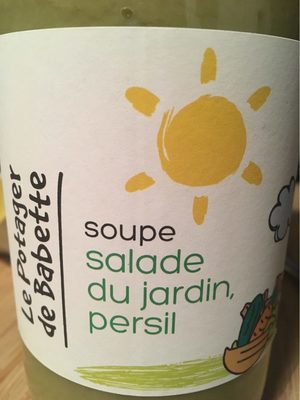 Soupe Salade Du Jardin PersilLe Potager De Babette25 kcal · 0.7g proteinB
 Mini-poireaux BioJardin Bio21 kcal · 0.6g proteinB
 Soupe De Légumes Du PotagerKarine & Jeff, Le bonheur est dans le pot20 kcal · 0.6g proteinB
 Soupe Dolce VitaKarine & Jeff19 kcal · 0.5g protein
Want this data in your app?
Free API access — barcode lookup, full-text search, macros, micronutrients and Nutri-Score for every food in the catalog.
Explore the Dietly API